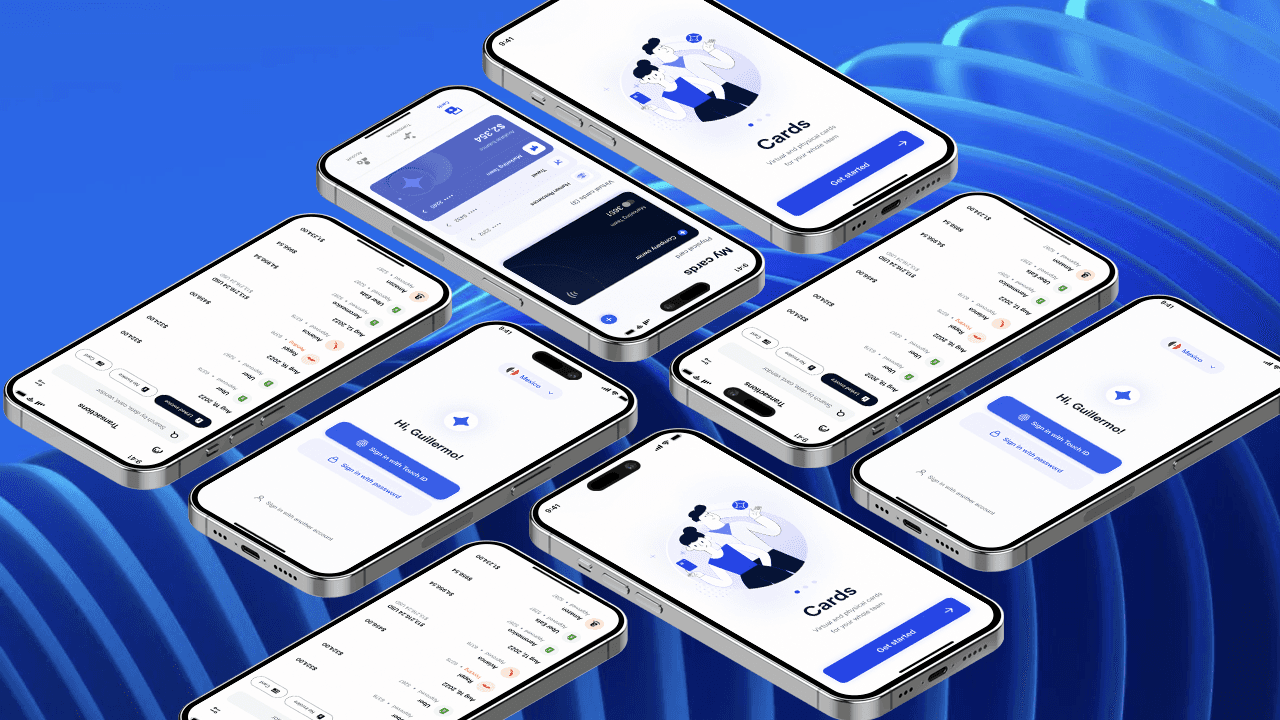
A mockup of a mobile for job gate home screen

Product Designer

Product Designer

Figma / Figjam / Jira / Teams / Maze / Hotjar / Confluence/

Figma / Figjam / Jira / Teams / Maze / Hotjar / Confluence/

Figma / Figjam / Jira / Teams / Maze / Hotjar / Confluence/

PM / Devs / Stakeholders

PD, PO, Devs, Stakeholders,

Figma / Figjam / Jira / Teams / Maze / Hotjar / Confluence/

Figma / Figjam / Jira / Teams / Maze / Hotjar / Confluence/

PM / Devs / Stakeholders

PD, PO, Devs, Stakeholders,

Clara

Financial control across multiple countries

THE PROBLEM

The platform had grown. The governance model underneath it hadn't.

Clara helps organizations manage corporate spending across multiple countries, teams, and financial structures.

As the business expanded into new markets, the platform inherited increasing complexity.

Every new country introduced:

  • New regulations

  • New approval structures

  • New permission requirements

  • New operational workflows

Over time, workflows became harder to navigate, permission models became increasingly difficult to understand, and the experience struggled to scale alongside the business.

Permissions became the product

Permissions became the product

Almost every action inside the platform was governed by roles, access levels, and organizational structures.

Small inconsistencies created significant operational confusion.

Almost every action inside the platform was governed by roles, access levels, and organizational structures.

Small inconsistencies created significant operational confusion.

Almost every action inside the platform was governed by roles, access levels, and organizational structures.

Small inconsistencies created significant operational confusion.

Administrators lacked visibility

Administrators lacked visibility

Understanding who could access what often required navigating multiple layers of permissions and organizational settings.

Understanding who could access what often required navigating multiple layers of permissions and organizational settings.

Understanding who could access what often required navigating multiple layers of permissions and organizational settings.

Navigation reflected the system

Navigation reflected the system

Not the user

The experience was organized around platform architecture rather than user responsibilities.

Users knew what they needed to accomplish.

They struggled to find where to do it.

Not the user

The experience was organized around platform architecture rather than user responsibilities.

Users knew what they needed to accomplish.

They struggled to find where to do it.

Not the user

The experience was organized around platform architecture rather than user responsibilities.

Users knew what they needed to accomplish.

They struggled to find where to do it.

"The challenge wasn't simplifying the interface. It was simplifying the system behind it."

"The challenge wasn't simplifying the interface. It was simplifying the system behind it."

Admin

Admin

A screenshot of job gate home, job details, and filters screens
DISCOVERY
DISCOVERY

We weren't redesigning financial workflows.

We were redesigning governance.

We weren't redesigning financial workflows.

We were redesigning governance.

Research initially focused on navigation and usability problems.

What emerged was something much larger.

Most friction originated from permission structures, role definitions, and governance models rather than individual screens.

Users weren't struggling because workflows were difficult.

They were struggling because the underlying system lacked transparency.

This shifted the project from a UI redesign into a systems-design challenge.

The question became:

How do we make financial governance understandable without reducing control?

Research initially focused on navigation and usability problems.

What emerged was something much larger.

Most friction originated from permission structures, role definitions, and governance models rather than individual screens.

Users weren't struggling because workflows were difficult.

They were struggling because the underlying system lacked transparency.

This shifted the project from a UI redesign into a systems-design challenge.

The question became:

How do we make financial governance understandable without reducing control?

Research initially focused on navigation and usability problems.

What emerged was something much larger.

Most friction originated from permission structures, role definitions, and governance models rather than individual screens.

Users weren't struggling because workflows were difficult.

They were struggling because the underlying system lacked transparency.

This shifted the project from a UI redesign into a systems-design challenge.

The question became:

How do we make financial governance understandable without reducing control?

Roles and responsibilities

Permission relationships

Organizational hierarchies

Country-specific requirements

It became the foundation for both the product redesign and the design system strategy.

This artifact exposed duplicated logic, permission conflicts, and scalability risks across markets.

This artifact exposed duplicated logic, permission conflicts, and scalability risks across markets.

TARGET USERS
Valeria
Finance Administrator

Finance Administrator

Needs visibility, control, and confidence when managing company spending.

Needs visibility, control, and confidence when managing company spending.

A screenshot of job gate home, job details, and filters screens
Ricardo

Finance Manager

→ How might we balance governance and usability?

Needs governance mechanisms that don't slow down operations.

→ How might we help administrators understand financial structures faster?

A screenshot of job gate home, job details, and filters screens
Mariana

Employee

→ How might we balance governance and usability?

Needs governance mechanisms that don't slow down operations.

→ How might we help administrators understand financial structures faster?

A screenshot of job gate home, job details, and filters screens

Design Decision

Helps small business owners manage inventory and place recurring orders

Connects with thousands of retailers across Mexico, supporting the daily operations of convenience stores, corner shops, and local businesses.

how might we...

→ How might we create scalable experiences across different markets?

→ How might we balance governance and usability?

→ How might we simplify permission management without reducing control?

→ How might we help administrators understand financial structures faster?

01

Product Around Responsibilities

Research showed that users think in responsibilities, not features. The platform was restructured around user objectives and operational tasks rather than system modules.

Tradeoff

This required significant changes to navigation and information architecture. However, it created a mental model that aligned with how users actually worked

02
Make Permissions Visible

Permissions existed everywhere but were rarely understandable. We redesigned access structures to make relationships between roles, permissions, and responsibilities easier to interpret.

Tradeoff

Exposing governance information increased complexity at the system level.

The challenge became presenting complexity without overwhelming users.

03

Multi-Market Scalability

Instead of creating market-specific experiences, we established reusable governance patterns capable of adapting across countries

Tradeoff

Created a scalable foundation capable of supporting future expansion.

A screenshot of job gate filters popup
DEFINE

Helps small business owners manage inventory and place recurring orders

Connects with thousands of retailers across Mexico, supporting the daily operations of convenience stores, corner shops, and local businesses.

store owners value speed, simplicity, and reliability.

Store owners value speed, simplicity, and reliability.

the experience should be optimized for reordering, not browsing

store owners value speed, simplicity, and reliability.

150+

Many place orders multiple times per week to restock their stores.

6

Order products regularly to maintain inventory and serve customers

18

Content

150+
150+
150+
150+

Many place orders multiple times per week to restock their stores.

store owners value speed, simplicity, and reliability.

Small corner stores

1 to 3 employees. Low digital maturity

Reorder, don't stop

4 to 10 employees. Use digital tools ocasionally

Distributors & Wholesalers

High order volume. More complex operations

Distributors & Wholesalers

High order volume. More complex operations

Distributors & Wholesalers

High order volume. More complex operations

A screenshot of job gate filters popup

Content

Content

store owners value speed, simplicity, and reliability.

Step-by-step flows that teach and guide users without overhelming them.

Learning moments embedded naturally within the user journey.

Recomendations based on user interests, goals and behavior.

Visual and simple explanations of perfomance risk.

Define

Helps small business owners manage inventory and place recurring orders

Connects with thousands of retailers across Mexico, supporting the daily operations of convenience stores, corner shops, and local businesses.

Store owners value speed, simplicity, and reliability.

Small corner stores

1 to 3 employees. Low digital maturity

Reorder, don't stop

4 to 10 employees. Use digital tools ocasionally

Distributors & Wholesalers

High order volume. More complex operations

Distributors & Wholesalers

High order volume. More complex operations

FINAL EXPERIENCE

Small corner stores

1 to 3 employees. Low digital maturity

Small corner stores

1 to 3 employees. Low digital maturity

Small corner stores

1 to 3 employees. Low digital maturity

Small corner stores

1 to 3 employees. Low digital maturity

Define

Helps small business owners manage inventory and place recurring orders

Connects with thousands of retailers across Mexico, supporting the daily operations of convenience stores, corner shops, and local businesses.

1 to 3 employees. Low digital maturity

4 to 10 employees. Use digital tools ocasionally

High order volume. More complex operations

FINAL EXPERIENCE

FINAL EXPERIENCE

FINAL EXPERIENCE

1 to 3 employees. Low digital maturity

4 to 10 employees. Use digital tools ocasionally

High order volume. More complex operations

High order volume. More complex operations

FINAL EXPERIENCE

1 to 3 employees. Low digital maturity

4 to 10 employees. Use digital tools ocasionally

High order volume. More complex operations

High order volume. More complex operations

FINAL EXPERIENCE

FINAL EXPERIENCE

FINAL EXPERIENCE

1 to 3 employees. Low digital maturity

1 to 3 employees. Low digital maturity

4 to 10 employees. Use digital tools ocasionally

1 to 3 employees. Low digital maturity

High order volume. More complex operations

1 to 3 employees. Low digital maturity

High order volume. More complex operations

1 to 3 employees. Low digital maturity

1 to 3 employees. Low digital maturity

4 to 10 employees. Use digital tools ocasionally

Distributors & Wholesalers

High order volume. More complex operations